Illegal Bikes Electric Dirt Bikes: Sur-Ron, Talaria, and OHV Rules
Multi-kilowatt, no-pedal machines that belong on OHV land—not in the e-bike class
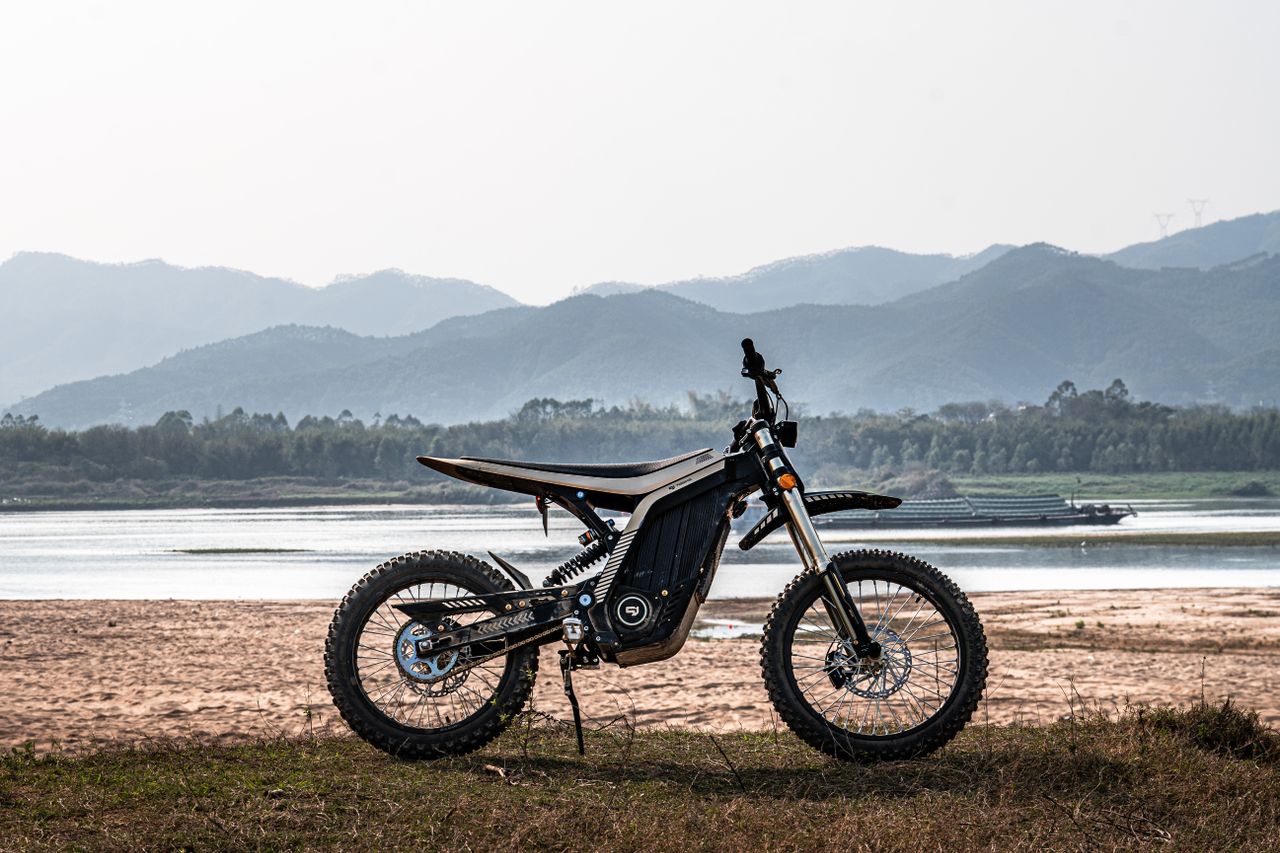
Sur-Ron Light Bee–class machines, Talaria Sting variants, Segway Dirt eBike / similar off-road platforms, and a long tail of clone brands occupy a category riders casually call “electric dirt bikes.” Legally they are almost never Class 1–3 e-bikes. They are lightweight electric motorcycles designed primarily for off-highway use: high continuous and peak power, motorcycle controls, knobby tires, and—critically—no manufacturer pedals on the configurations that dominate the market. This page explains why that hardware fails bicycle definitions and how California’s OHV rules made the split explicit.
What these machines are
Typical production electric dirt bikes in this segment share a pattern:
- Multi-kilowatt electrical systems (often several kilowatts continuous with much higher peak claims);
- Throttle-first motorcycle controls rather than bicycle pedal-assist sensors;
- No factory pedals on the flagship off-road models;
- Top speeds commonly advertised in the 45+ mph range (some tunes and larger models go higher);
- Suspension, geometry, and seating built like a small dirt bike, not a mountain bike.
California OHV information bulletins listing manufacturers of off-highway electric motorcycles have named brands including Sur-Ron, Talaria, Ventus, E Ride Pro, Stacyc, and Stark Future. That list is illustrative of the product class, not an exhaustive global catalog. Many direct-to-consumer clones copy the same architecture while still using “e-bike” language in ads—the exact marketing failure cities and states are writing statutes to stop.
Why they fail e-bike definitions
Under 15 U.S.C. § 2085, a low-speed electric bicycle needs fully operable pedals, a motor of less than 750 W, and motor-only speed under 20 mph on the federal test. A stock Sur-Ron-class dirt bike fails on multiple prongs at once. State Class 1–3 labels presuppose the same bicycle product box; sticking a class decal on a multi-kilowatt dirt bike does not rewrite the vehicle code.
PeopleForBikes groups these products with the broader e-moto problem: motor vehicles sold with bicycle vocabulary. See e-bike vs e-moto for the watt/speed/pedal matrix that applies before brand names matter.
In Great Britain, the same hardware is far outside EAPC limits (250 W, 15.5 mph assist). On public roads it is a motorcycle/moped problem requiring the full motor-vehicle stack unless a specific approved pathway exists—which a raw off-road electric dirt bike usually lacks.
California SB 586: off-highway electric motorcycles
Senate Bill 586, effective January 1, 2026, added California Vehicle Code § 436.1 defining an off-highway electric motorcycle (eMoto) as an off-highway motorcycle that meets all of the following: manufacturer-designed primarily for off-highway use; electric motor (motor number not required); handlebar steering; manufacturer straddle seat; two wheels; not equipped with pedals from the manufacturer.
Consequences summarized in California Parks / OHV bulletins:
- These vehicles are not electric bicycles under § 312.5 and shall not be advertised, sold, or labeled as e-bikes.
- They are not mopeds under § 406.
- They require OHV identification (California Green Sticker) for operation where OHV rules apply.
- Bulletins warn that aftermarket lighting and street kits do not convert a manufacturer off-highway design into an on-highway motorcycle for registration purposes.
Later labeling legislation (SB 1167, signed September 30, 2026, with a January 1, 2027 effective date in chaptered reporting) adds disclosure duties so sellers of electric mopeds, motor-driven cycles, and off-highway electric motorcycles must tell buyers they are purchasing a motor vehicle. Full city/state overlay: NYC and California. Bay Area enforcement notes: California Bay Area cases.
Street-legal myths
Online forums endlessly debate “street-legal kits” for Sur-Ron-platform bikes: mirrors, lights, horns, sometimes pedal kits. Reality is jurisdiction-specific and often disappointing:
- California: state OHV materials state these eMotos cannot be retrofitted into on-highway registration when designed as off-highway motorcycles.
- Other US states: some allow on-highway motorcycle registration if the vehicle meets federal motor-vehicle safety standards, VIN rules, and DMV inspection—requirements far heavier than bicycle rules. Many lightweight imports lack the certification paperwork.
- NYC: devices over 750 W or capable of more than 25 mph are illegal to sell or operate as e-bikes; a dirt bike in bike-lane clothing is a primary target of the 2026 retailer crackdowns documented in NYC crackdowns.
If your use case is street commuting, buy a compliant Class e-bike or a properly certified motorcycle/moped. If your use case is closed course or designated OHV land, follow OHV identification and land-manager rules instead of bicycle assumptions.
Safety and insurance notes (non-legal)
Electric dirt bikes combine motorcycle speeds with bicycle-adjacent weights and, often, bicycle-shop retail channels. That mismatch shows up in crash severity discussions and in insurer skepticism when a claim involves an unregistered high-speed device sold as a toy. Helmet, eye protection, and OHV land rules are the minimum practical bar; treat motorcycle training as more relevant than bike-lane etiquette.
How to classify a listing in 60 seconds
- Pedals from the factory? If no, it is not a US low-speed e-bike / CA Class e-bike.
- Continuous power under the local bicycle cap (750 W US federal / 250 W UK)? If no, stop calling it an e-bike.
- Motor-only or advertised top speed under local bicycle ceilings (20 mph motor-only US federal; 25 mph NYC sales line; 15.5 mph UK assist)? If no, it is a motor vehicle product.
- Seller pushes unlock tutorials next to “street legal” claims? Treat as e-moto risk.
- Confirm with the Classes Hub, how to identify, and local laws pages before money leaves your account.
Related pages
This page summarizes public statutes, OHV bulletins, and product-class reporting. It is not legal advice and not an endorsement of any brand.
Frequently Asked Questions
Clear answers grounded in published rules and reporting.
Is a Sur-Ron an e-bike?
Not under US federal low-speed e-bike rules or California’s Class e-bike definition. Sur-Ron-style machines are multi-kilowatt electric dirt bikes / off-highway electric motorcycles, typically without factory pedals.
What did California SB 586 change?
From January 1, 2026 it defines off-highway electric motorcycles (no manufacturer pedals, off-highway design, straddle seat, two wheels) as OHVs needing green-sticker identification and bans labeling them as e-bikes.
Can I make an electric dirt bike street legal with lights and mirrors?
Sometimes in states with a full motorcycle registration path and proper certification—often not. California OHV bulletins say these eMotos cannot be retrofitted into on-highway registration when designed as off-highway. Check your DMV.
How fast are these bikes?
Stock and common tunes are widely advertised in the 45+ mph range, far above bicycle assist caps (20–28 mph class assist in many US states; 15.5 mph UK EAPC assist).
Where should I read next?
Compare definitions on e-bike vs e-moto, then read NYC and California for sales and OHV enforcement.